A residential geothermal system installation represents a structuring decision for a homeowner. It aims to sustainably improve the energy performance of their home. Far beyond the simple installation of equipment, this type of project involves a complete reflection on the building. The land, the real thermal needs, and long-term profitability must also be considered. This technology is attracting more and more interest in Québec. It responds to a double objective: reducing energy costs and securing thermal comfort despite strong seasonal variations.
A residential geothermal system installation relies on a principle that appears simple: using the heat naturally present in the ground. This energy is used to heat the house during winter and can also contribute to cooling during summer. Behind this simple logic, several technical decisions must be made very early. The choice of the capture type directly influences performance. The geological study, compatibility with existing systems, heat pump sizing, and the analysis of financial assistance also play a determining role.
Before beginning a residential geothermal system installation project, it is necessary to understand the steps of the process. Technical constraints must be identified from the start, as well as the real costs. A successful installation never depends solely on the selected equipment. It relies on a complete, rigorous, and building-adapted approach.
Evaluating Whether Your Home Is Adapted to a Residential Geothermal System Installation
Before any installation, the first step consists of determining whether the building is truly suitable for a residential geothermal system installation project. This analysis goes far beyond the simple surface area of the house. It makes it possible to understand how the home consumes energy on a daily basis. The building’s real thermal load must be examined. Insulation quality plays a central role in overall performance. Existing heat distribution systems also influence future efficiency. The airtightness of the building envelope and occupants’ energy-consumption habits must also be studied.
A recent, well-insulated, and properly ventilated residence will not react in the same way as an older house presenting significant thermal losses.
A poorly insulated house can technically receive a geothermal system. However, economic performance will be reduced if thermal losses remain high. A prior energy study makes it possible to identify priority improvements before installation. Replacing certain windows can sometimes be enough to improve thermal balance. Attic insulation also remains a very concrete lever. Correcting thermal bridges often provides immediate gains. These adjustments directly influence the final sizing of the system. They also affect the future profitability of your installation.
The type of internal distribution system also plays a determining role. A residential geothermal system works particularly well with radiant floor heating. It also delivers very good results with a properly balanced central forced-air system. When the existing network is old, certain adjustments become necessary. They make it possible to ensure homogeneous heat distribution throughout every room. Poor air circulation quickly limits expected gains. An improperly balanced hydraulic system can also slow down overall performance.
Understanding Land Constraints Before Installation
The land directly determines the type of residential geothermal system installation possible. A geological analysis makes it possible to evaluate the thermal conductivity of the soil. It also verifies the presence of rock and the exploitable depth. The possible presence of groundwater must also be identified. Finally, it must be confirmed that drilling can be completed under good technical conditions.
Vertical loop systems require deep drilling. They can reach several hundred feet depending on the land. This solution is well suited for smaller lots. It also remains highly adapted to urban environments because it uses little surface area.
Horizontal systems require more available space. The pipes are buried across a large surface area and at shallow depth. Their efficiency directly depends on the exploitable surface area. The thermal stability of the land also influences their performance.
The nature of the land also influences costs. Rocky soil often increases drilling time. Difficult site access also complicates the intervention. In certain cases, project logistics become more complex. A good understanding of the land from the beginning therefore helps avoid significant budget discrepancies.
The Technical Steps of a Residential Geothermal System Installation
A residential geothermal system installation always begins with a detailed thermal study. This step makes it possible to precisely calculate the heating and cooling needs of the house. The building’s surface area is taken into account. Insulation and orientation also influence the calculations. The airtightness level and real seasonal usage patterns must be integrated. This analysis is used to measure the building’s annual thermal load. It also determines the truly required power level. The objective remains to ensure constant comfort without overconsumption. Architectural characteristics are also examined. Ceiling height, opening quality, and wind exposure directly influence energy losses.
Next comes the choice of the geothermal heat pump and the adapted capture type. This decision does not depend only on the budget, but also on the nature of the land, the available space, and the desired performance level. Drilling or excavation work is then completed before the installation of geothermal loops. This step requires precise coordination because the installation quality of underground circuits directly influences future performance. Poorly executed drilling or imprecise positioning can reduce the system’s thermal exchange capacity and permanently affect its performance.
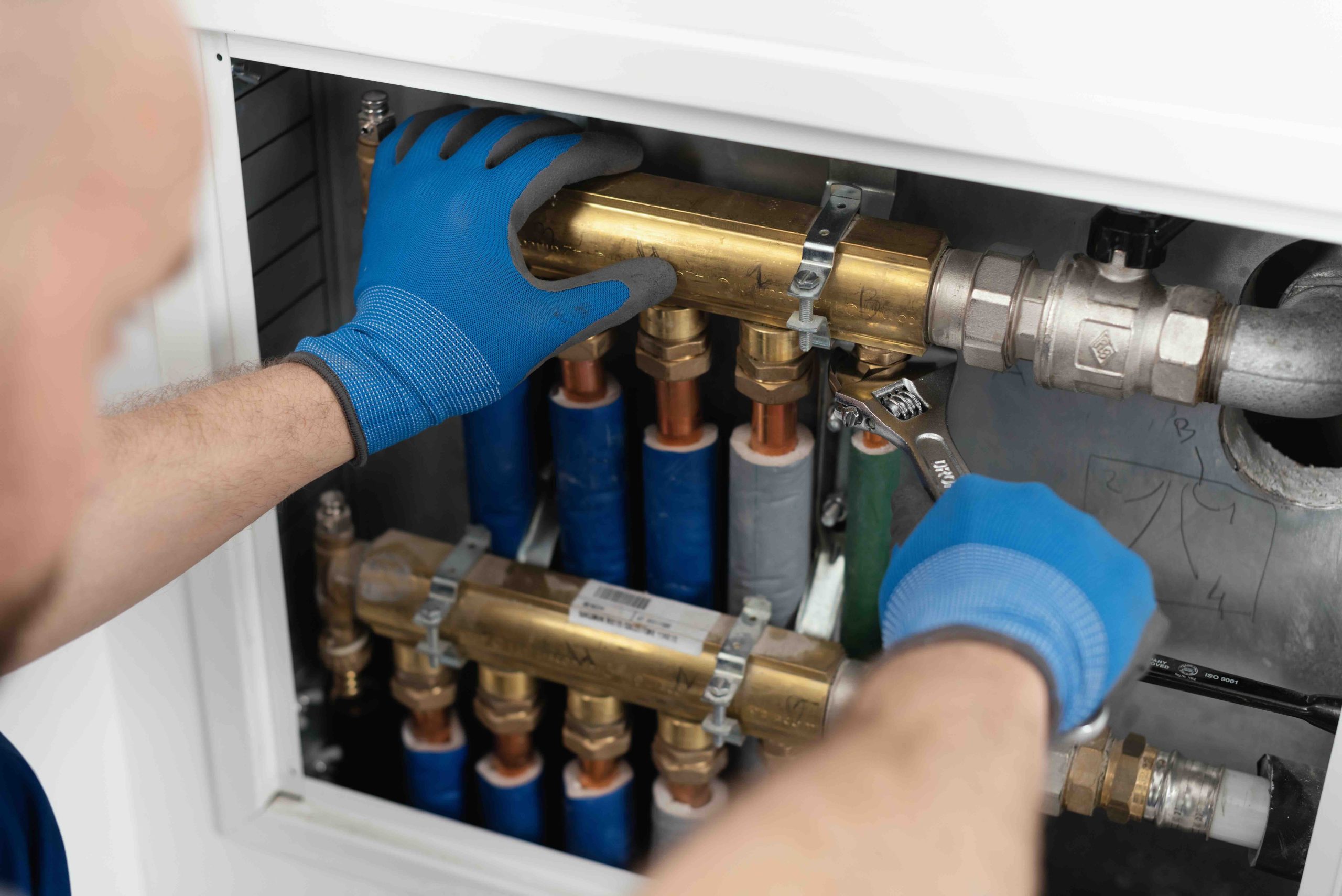
Once the buried circuits are installed, the interior equipment is connected to the existing distribution system. This phase includes:
- Connecting the heat pump;
- Linking it with the central heating network or radiant floor system;
- Complete flow verification.
Hydraulic or air-distribution adjustments are sometimes necessary to optimize thermal diffusion, balance flows, and guarantee stable operation. Commissioning tests then make it possible to validate performance, correct parameters, and ensure that a residential geothermal system installation operates under optimal conditions from the first weeks of use.
What Costs Should Be Expected for a Residential Geothermal System Installation?
A residential geothermal system installation represents a significant investment that must be analyzed within a global perspective. For a single-family house, costs generally vary between $30,000 and $45,000, depending on land complexity, required power, the chosen capture type, and the level of integration with existing installations. Certain elements can increase this budget, notably difficult access for drilling equipment, a strong presence of rock, or a greater capture depth.
The cost of a project does not correspond solely to the purchase of a heat pump. It also includes all the engineering necessary for the proper operation of the system. Expenses generally include the preliminary thermal study, project planning, drilling or excavation work, geothermal loop installation, hydraulic or air-distribution connections, commissioning, as well as initial performance verification. A significant portion of the budget also concerns underground capture work, which requires specialized equipment and high technical expertise.
In several projects, certain adaptations inside the building are also necessary. The existing distribution network may need adjustments to ensure optimal compatibility with residential geothermal energy. Electrical modifications, the addition of mechanical components, or a partial reconfiguration of the central heating system may be required to guarantee stable and homogeneous heat distribution.
Finally, this investment must be evaluated over the long term. A properly designed installation greatly reduces annual energy costs and limits the need for major equipment replacement. It is this sustainable vision that explains why residential geothermal energy remains one of the most structuring solutions in residential energy performance today.
Available Grants and Financial Assistance
Several Québec programs can support a residential geothermal system installation and concretely modify the financial structure of the project. Rénoclimat remains an important reference when energy-performance gains are demonstrated following energy analyses completed before and after the work. This program makes it possible to obtain financial assistance according to the real improvement in building performance, which means that the overall quality of the project directly influences the accessible amount. In several cases, installing this type of system makes it possible to increase the level of assistance obtained when accompanied by other coherent energy improvements.
Complementary assistance may also exist depending on Hydro-Québec’s active programs and federal initiatives related to energy efficiency. Depending on the period, certain programs make it possible to significantly reduce the initial cost when the project meets precise performance criteria, particularly regarding the energy efficiency of installed equipment. Hydro-Québec regularly adjusts its programs according to provincial energy objectives, which makes updated verification useful when planning the project.
At the federal level, certain initiatives related to residential energy efficiency have also made it possible to support energy-modernization projects when installed equipment meets recognized standards. Financial institutions also offer green loans or financing solutions adapted to high-energy-performance work, which can improve project feasibility without destabilizing the initial investment.
A precise analysis therefore makes it possible to determine which forms of assistance are truly accessible according to the project, building type, work schedule, and combination of planned improvements. This step plays an important role because a good understanding of available programs can significantly reduce the real cost of a residential geothermal system installation.
Conclusion: Properly Preparing Your Residential Geothermal System Installation Project
Completing a residential geothermal system installation without prior analysis exposes the project to costly mistakes that are sometimes difficult to correct once work has begun. Every step directly influences the system’s future performance: understanding the land, evaluating the building’s thermal performance, choosing the capture method, sizing the heat pump, integrating with the existing distribution system, and identifying truly accessible financial assistance. None of these elements should be treated separately if the objective is to obtain a durable and truly high-performance system.
A residential geothermal system installation is not limited to the installation of modern equipment. It fits within a complete energy logic designed for several decades. When properly designed, it makes it possible to stabilize energy costs, strengthen indoor comfort throughout every season, and sustainably increase property value. Conversely, a poorly prepared project can limit expected gains, extend return on investment, and create unnecessary technical adjustments.
An expert approach precisely makes it possible to transform a residential geothermal system installation into a durable, high-performance, and profitable solution. Professional support provides a clear understanding of the land’s real potential, a precise estimate of possible savings, and rigorous installation planning. It also makes it possible to efficiently coordinate technical, financial, and regulatory aspects so that every decision supports the project’s overall performance.
Before beginning, it is therefore essential to have your project analyzed by a specialist capable of precisely evaluating your situation. If you are considering a residential geothermal system installation, contact us to obtain:
- A personalized study;
- An understanding of the truly relevant options for your home;
- A clear, structured, and sustainable vision of your energy investment.