
Dual-energy is now establishing itself as one of the most advanced solutions for rethinking residential and commercial heating in a context of energy transition, pressure on networks, and sustained increases in costs. Far from being a simple technical alternative or a default choice, it relies on an advanced logic of energy source optimization, designed to respond to demanding climate realities, particularly in regions where winters are long and harsh.
Adopting dual-energy means moving away from a monolithic vision of heating. It means accepting that each energy source has its strengths, its limits, and its moments of relevance. This expert approach aims to use the best of each source at the most appropriate moment in order to maximize the overall performance of the system, reduce operating costs, and strengthen the building’s energy resilience. The possibilities offered by dual-energy are numerous, but they require a detailed understanding of technical, economic, and strategic issues in order to be fully exploited.
Rather than depending on a single energy source, dual-energy combines two complementary sources (most often electricity and a fuel source) and automatically selects the most relevant one according to precise parameters. This flexibility opens the door to several installation scenarios, each responding to distinct objectives: budget control, securing heating during peak periods, enhancing an existing installation, or progressively adapting to the energy transition.
Understanding the Energy Logic Behind Dual-Energy
Dual-energy relies on a fundamental principle: using the most efficient energy at the right moment, and not simply the one that is available. When outdoor temperatures are moderate, electricity becomes the priority source. It offers excellent performance, supply stability, and, in many territories, a competitive cost. Under these conditions, electrical systems, particularly heat pumps, operate with optimal efficiency.
When the cold intensifies, the context changes. Demand on the electrical network increases significantly, equipment performance decreases, and indirect costs become higher. This is where dual-energy takes on its full meaning. The system automatically switches to a second source, often more efficient under extreme conditions, capable of maintaining a constant comfort.
This switching process is not the result of a simple mechanical choice. It is managed by a precise control device, configured according to temperature thresholds, pricing rules, and sometimes even real-time performance data. From an expert perspective, dual-energy acts as an intelligent energy regulator, both at the building level and at the scale of the collective network.
To go deeper into the subject, do not hesitate to read our dedicated article.
Different Possible Configurations
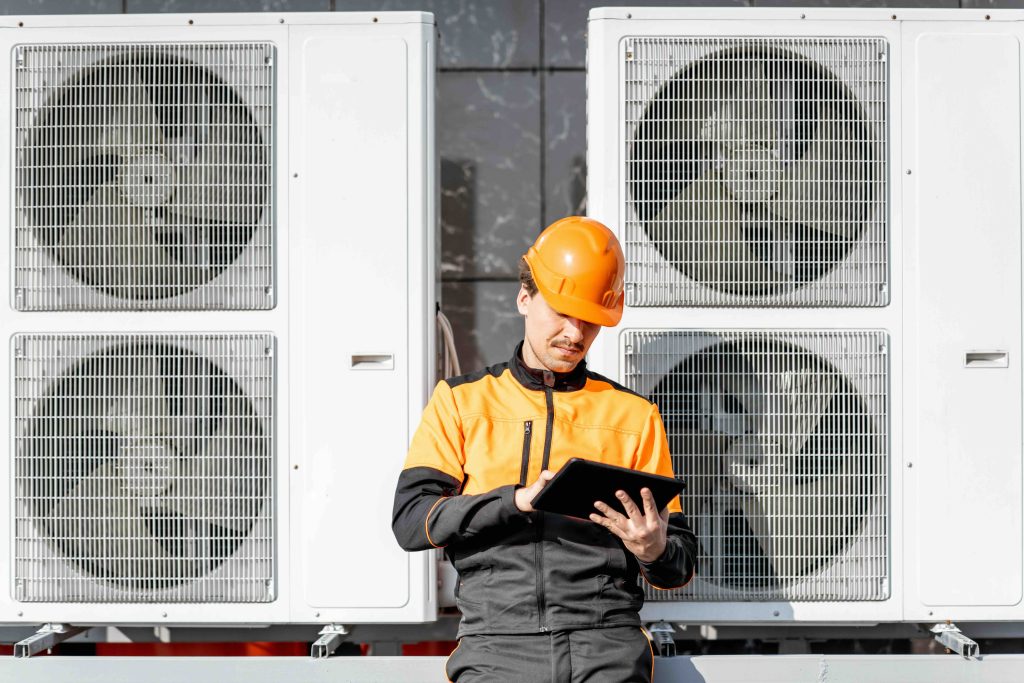
The possibilities in dual-energy vary greatly depending on the type of building, the existing installation, and the objectives being pursued. The most common configuration combines an electric heat pump with a gas or oil heating system. In this case, the heat pump covers the majority of annual needs, particularly during mid-season and moderate winters. While the fuel source intervenes only during periods of intense cold.
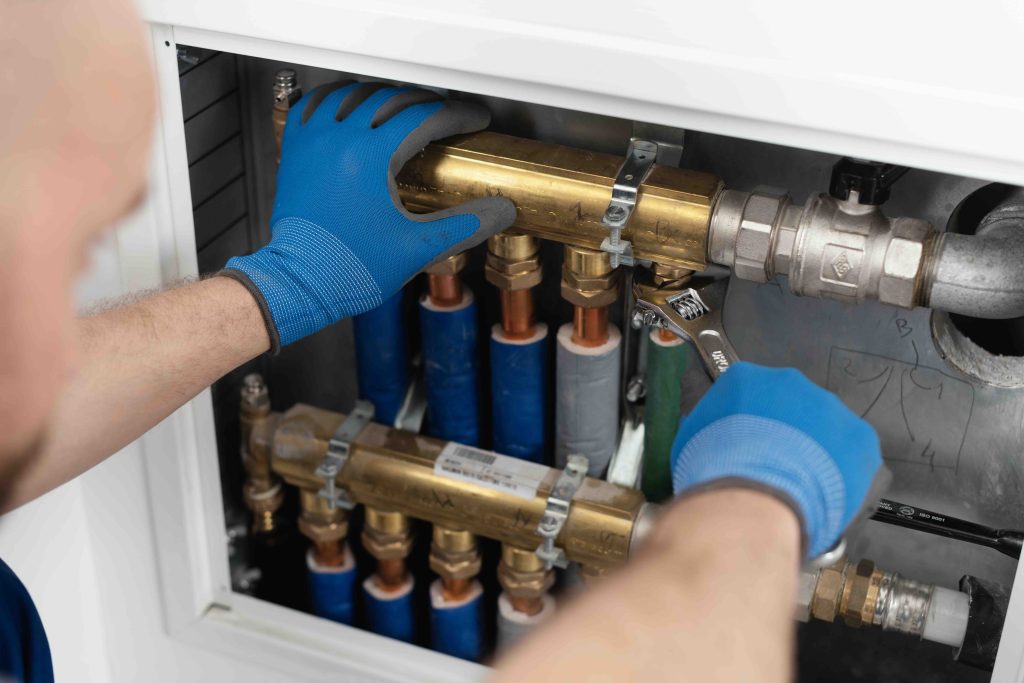
There are also progressive modernization scenarios. A dual-energy installation can be integrated into an existing central furnace, which improves energy performance without replacing the entire system. Dual-energy then acts as an optimization layer, correcting the weaknesses of an older installation while extending its lifespan.
For more complex or larger buildings, certain configurations include centralized management systems. These devices make it possible to dynamically adjust the energy source according to occupancy like :
- time periods ;
- measured real performance ;
- or pricing constraints.
We then enter into a logic of advanced energy management, where dual-energy becomes a true management tool.
Dual-Energy as a Tool for Cost Reduction and Stabilization
From a financial perspective, dual-energy is above all a medium- and long-term optimization strategy. It aims to reduce dependence on a single energy source and intelligently take advantage of periods when each source is the most beneficial. In regions benefiting from dual-energy pricing, electricity becomes particularly competitive above a certain temperature threshold, making it possible to cover a large part of annual needs at a lower cost.</p>
The second source is not designed to replace electricity, but to complement it in a targeted way. It intervenes when electrical performance decreases or when pricing conditions become less favorable. This complementarity makes it possible to smooth expenses, improve budget predictability, and limit exposure to energy fluctuations.
Over the long term, dual-energy acts as an economic shock absorber. It protects the owner against sudden tariff increases and offers better control over operating costs while maintaining comfort.
To go deeper into the subject, do not hesitate to read our article.
Energy Security and Heating Continuity
A major advantage, often underestimated, of dual-energy lies in the energy security it provides. By having two distinct and independent sources, the building gains resilience in the face of power outages, temporary power restrictions, or extreme weather events. This ability to rely on an alternative energy source makes it possible to avoid heating interruptions, even when the main network is heavily used or partially unavailable.</p>
If one source becomes less efficient or temporarily inaccessible, the other automatically takes over, without manual intervention and without any noticeable impact on indoor comfort. This continuous operation is particularly valuable during periods of intense cold, where any interruption can have significant consequences, both for the building and for the well-being of occupants.</p>
This redundancy is particularly relevant for residences located in rural areas, professional buildings, multi-unit residential buildings, or infrastructures where heating continuity is critical. It provides lasting peace of mind, limits risks related to service interruptions, and reduces dependence on a single energy channel. From an expert perspective, dual-energy therefore goes beyond the simple economic framework to become a true energy security strategy, integrated into a global vision of performance and reliability.</p>
Dual-Energy Within a Sustainable and Evolving Vision
Dual-energy naturally fits within a realistic and progressive energy transition trajectory. It allows a reduction in fossil fuel consumption without imposing an immediate break or disproportionate investments. By prioritizing electricity whenever possible, it promotes a progressive reduction in emissions while maintaining a high level of comfort.
It also offers great scalability. A dual-energy installation can evolve over time, integrate new technologies, adjust its switching thresholds, or adapt to pricing changes. This adaptability makes it a particularly relevant solution for owners who want to invest in :
- a durable ;
- flexible ;
- and sustainable system.
Our Expert Approach to Dual-Energy
Implementing a high-performance dual-energy solution is never limited to the choice of equipment. It requires an in-depth analysis of the building, actual usage, climate constraints, and long-term objectives. Every parameter directly influences the ideal configuration and the savings that can realistically be achieved.
Our approach consists of designing coherent, optimized, and perfectly calibrated dual-energy systems. We analyze your current installation, identify optimization opportunities, and support you in implementing a reliable, high-performance, and evolving solution.
Contact us to explore in depth the possibilities offered by dual-energy and move toward a true energy performance tool.